MotoMan

Clean is Cool !!
Tecleo
aquí para la versión Española
|
|
|
|
Hello Motoman, I just read your article on Break-In and I am curious if it is good to break in a regular street bike the way that you explained. I saw the pictures of the Honda F3 piston, and I know a picture is worth a thousand words, but it just doesn't seem right. I am however open to trying your method as I have just purchased a 2001 Yamaha R1, and need to break it in. I do not know a dyno that is close to me, and don't have the $$$ to spend on dyno runs, so what do you suggest for breaking in a new bike on the street? Thank you, and I appreciate your help and advice ! ~ Mototune USA Fan |
Dear Mototune USA Fan: |
Dirt & Dust... What's
the Big Deal ???
Mechanics usually have dirty hands !
Tools are usually greasy & grimy !
Engines are supposed to be dirty !
So why bother ???
If you want to be the best, pay close attention to this page !!
This is the most important lesson I can teach you.
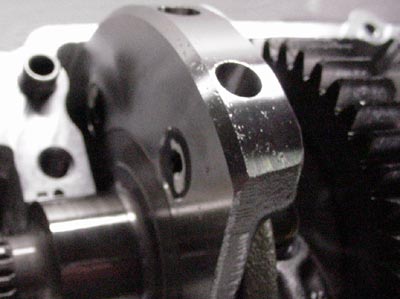 |
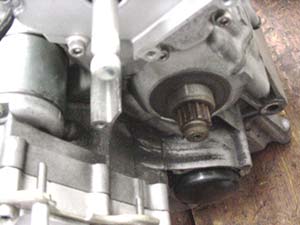
This picture was taken seconds after the cases were
split. As you can see, airborne dust has already begun to accumulate on
the oily crankshaft. |
|
The one thing it was
good for, was that it made me realize just how much power gets lost to
friction. |
Always Remember:
It's much easier to lose
power in an engine than it is to
gain
it !
How do you keep from losing the
power you're trying to gain ??
By Keeping Everything Perfectly Clean.
The first project
is to clean all your tools. If you've been using them to wrench at the
racetrack or on a dirty bike, you've got to clean them before you use them
on an engine. Before you remove the
carburetors from the motor, be sure to clean all the dirt and sand from
the area near the intake ports. Then immediately cover the ports with duct
tape to keep dirt from getting into them. |
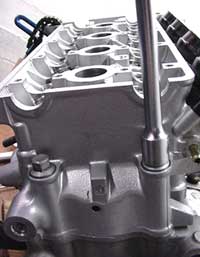
If you're taking the engine apart further you'll have to clean the engine itself.
|
|
This R6 engine is typical. Look at all the chain lube crud and dirt. |
|
|
Never Contaminate Your
"Tool"... |
|
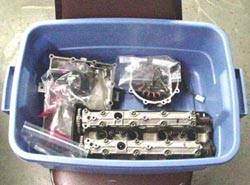
Once the clean parts are removed
by your clean tools, the way to keep
everything clean is to bag the "outside" bolts. Then set all the
clean parts in a freshly washed rubbermaid container. Always keep the lid on when the parts are being stored.
|
|
|
|
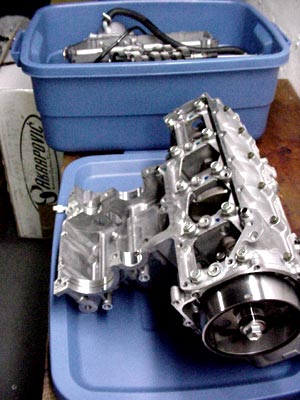
I use the
rubbermaid container lid to catch the excess oil, and to keep the engine
on
a clean surface at all times.
|
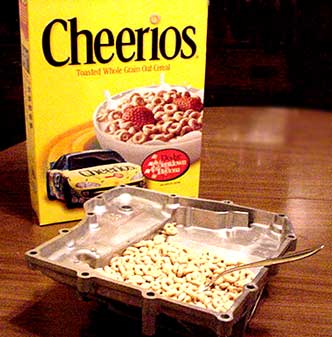
So...
How Clean Should Your Parts Be ???
|
MotoMan Says: |
|
Wash your parts the same way
you'd wash dishes.
Use Soap and Water !!
Promote The
Sport of Motorcycling!!
Please Tell 3 of Your Riding
Friends To Sign Up For:

Click Here:
Tell
Your Friends About Power News !!!